
How Reggio-Inspired Classrooms in Fishers, IN Approach Fire Safety Through Inquiry and Exploration
Quick Answer
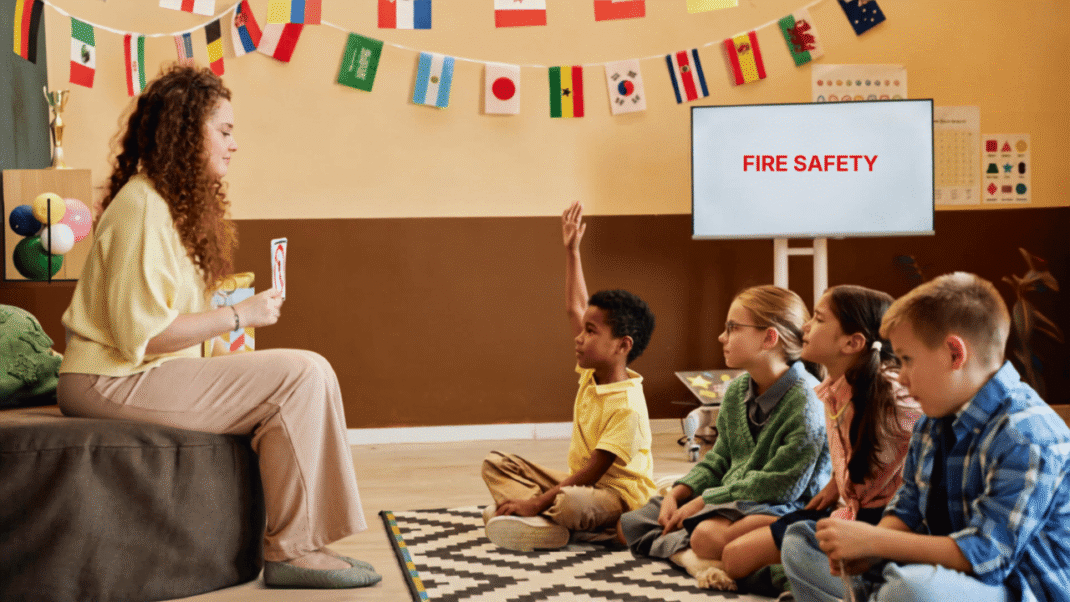
In Reggio-inspired early childhood classrooms, fire safety becomes a genuine subject of inquiry. Rather than delivering a single lesson, educators follow children’s questions about fire, heat, and community helpers across several days or weeks. The result is an understanding of safety concepts that children build together, at their own pace, through observation, conversation, and creative expression.
What Young Children Can Learn When Fire Safety Becomes an Inquiry
The U.S. Fire Administration reports that children under five have a higher risk of fire-related injury than older age groups, making early childhood one of the most important windows for building foundational safety awareness. In Reggio-inspired classrooms, that awareness develops through the same process children use to explore any meaningful topic: close observation, open-ended questioning, and collaborative discovery with peers and educators.
October is recognized nationally as Fire Prevention Month, and classrooms across Fishers, IN use this time to open a conversation that can last well beyond a single fire drill. At Dolce Early Learning Center, that conversation begins with children’s own curiosity.
How Educators Use Provocation to Introduce Fire Safety Concepts
In Reggio-inspired education, a provocation is any material, question, or experience that invites children to look more closely and wonder aloud. Fire safety offers many natural starting points. An educator might place a firefighter’s helmet in the atelier alongside a few natural materials and wait to see which children gather, what they ask, and where their thinking goes.
From there, the inquiry can open in many directions. Children might ask why firefighters wear so much clothing, what makes something too hot to touch, or how someone knows when to call for help. These questions are not interruptions to a safety lesson. They are the lesson itself.
Educators observe and document these early conversations, noting which ideas return across multiple days and which questions seem to carry the most energy. That documentation helps shape what comes next, whether that means inviting a local firefighter to demonstrate gear in person, reading a book like No Dragons for Tea together, or creating a “hot vs. not” sorting exploration with safe classroom materials.
What Fire Drills Look Like in a Reggio-Inspired Classroom
Fire drills are a required part of every early childhood program, including Reggio-inspired centers. In Fishers, IN, Dolce Early Learning Center completes a minimum of one fire drill each month and reviews primary and secondary evacuation routes as part of ongoing safety preparation. After each drill, educators confirm that every child is accounted for through a name-to-face check before returning inside.
What makes the experience different in a Reggio context is what happens around the drill itself. Before a drill, educators talk with children in plain language about what the alarm sound means, where the class will walk, and what each person’s role is. Children often have questions. Some want to understand what makes the alarm go off. Others are curious about what firefighters do when they arrive. These conversations are welcomed and documented.
After a drill, children may return to the atelier to draw what they noticed or build a version of the evacuation route using loose parts. This kind of expression helps children process the experience and gives educators a window into what children understood, what surprised them, and what they still want to know.
Why the Environment Supports Fire Safety Learning Year-Round
In Reggio philosophy, the environment functions as the third teacher. The way a classroom is arranged, what materials are available, and which children’s questions are made visible on the walls all communicate what the community values. During October and throughout the year, educators at Dolce Early Learning Center make safety part of the physical environment in ways that feel meaningful rather than procedural.
Documentation panels might display photographs from a recent fire drill alongside children’s drawings and the questions they asked that week. An area of the classroom might hold books about community helpers alongside materials children can use to represent what they are learning. A simple provocation, such as a collection of materials in warm colors paired with a single open question, can hold a child’s attention far longer than a worksheet on fire prevention rules.
According to NAEYC, meaningful learning in early childhood happens when children are active participants who can connect new information to their own experiences and relationships. Framing fire safety as an ongoing inquiry, one that involves real questions, real conversations with caring adults, and real community members like firefighters, gives children an experience that stays with them.
Frequently Asked Questions
What does fire safety education look like in a Reggio-inspired preschool?
In a Reggio-inspired classroom, fire safety is explored through inquiry rather than a single lesson. Educators introduce materials and questions that invite children to think about heat, community helpers, and what to do in an emergency. Projects develop over several days based on where children’s curiosity leads.
How do young children learn to see firefighters as helpers rather than frightening figures?
Familiarity and relationship are both important here. Educators introduce firefighter gear gradually, often through books, photographs, or a visit from a local firefighter who explains each piece of equipment and its purpose. When children have a chance to ask their own questions and hear calm, honest answers, the figure of a firefighter becomes understandable rather than alarming.
Are fire drills part of the Reggio-inspired program, and how are they handled with young children?
Fire drills are a required and regular part of the program. Educators prepare children beforehand with clear, calm explanations of what the alarm sound means and where the class will go. After each drill, educators complete a name-to-face check to confirm every child is accounted for. The time before and after a drill often becomes part of the inquiry, as children ask questions and process the experience through drawing, conversation, or loose parts play.
How does documentation support fire safety learning?
Documentation helps children and families see the thinking that happens around a safety topic. Photographs from a fire drill, a child’s drawing of a fire truck, and a transcribed conversation about what makes something too hot to touch can all be displayed together. This makes learning visible and gives families a clear picture of what their child is exploring and understanding.
Can families extend this learning at home?
Families can continue the conversation in simple ways, such as reviewing where the family would meet outside if they needed to leave the house quickly, or reading one of the books explored in the classroom together. Educators at Dolce Early Learning Center are glad to share documentation from the current inquiry so families know what questions their child has been sitting with.
Inquiry into fire safety gives children something more lasting than a set of rules to memorize. It gives them a way of thinking about their own safety, their community, and the people who help keep them both. At Dolce Early Learning Center in Fishers, IN, that kind of thinking is at the center of how children learn all year long.
We would love to show you what this looks like in person. Schedule a tour at Dolce Early Learning Center in Fishers, IN today.
Related Posts
All Posts